Your body often shows signs of stress before you consciously register them. Perhaps it is the tight jaw you only notice at the end of the day, or the painful knot in your shoulders that seems impossibly hard to loosen. We get so caught up in life that we barely notice (or actively ignore) what stress does to our bodies.
Somatic yoga is designed to bring your attention back to those cues. Through slow, intentional movement and body awareness, it can help you notice where you are holding tension and give your nervous system a chance to untangle.
What is Somatic Yoga?
It is a slower, softer style of movement that asks you to feel your way through a pose rather than force your way into one. Somatic yoga blends traditional yoga postures with somatics, a practice built around noticing sensation from the inside out. Instead of asking “does this look right,” it asks “does this feel right?”
That mindset shift changes everything. Somatic movement works by drawing your attention to interoception, which is your ability to sense tension, temperature and subtle shifts happening inside your body. The movements are small and unhurried. This gives your nervous system time to notice a pattern before gently letting it go.
How is Somatic Yoga Different From Regular Yoga?
Traditional yoga classes often focus on alignment. This is slightly different from what somatic yoga is. The latter shifts the focus inward, with many teachers encouraging you to close your eyes and pay attention to how each movement feels rather than how it looks.
Instead of demonstrating a pose, a somatic yoga teacher will usually talk you through it. You are invited to explore your own edges. This allows for space to listen to what your body has to say once you finally stop rushing it.
Simple Somatic Yoga Exercises to Try at Home
You do not need a studio, a special outfit or years of practice to begin. These gentle somatic yoga exercises are great starting points. There is no perfect shape to chase. There is only you, your breath, and whatever sensation shows up along the way.
Body Scan in Corpse Pose (Savasana)
Lie flat on your back with your arms and legs loosely extended. Close your eyes and let your breath slow down. Starting at the crown of your head, slowly bring your attention down through your body, noticing each area without judgement or thought. Do the body scan down to your toes and see how you feel.
Child’s Pose (Balasana)
Kneel with your big toes touching and your knees apart, then fold forward and rest your forehead on the mat. Breathe slowly into your lower back and let your arms rest wherever feels most natural. This gentle stretch is one of the easiest somatic yoga exercises to return to whenever you need a quick reset.
Cat-Cow Flow (Marjaryasana-Bitilasana)
Come onto all fours, placing your hands on the floor beneath your shoulders and your knees beneath your hips. As you inhale, let your belly drop and lift your gaze. As you exhale, round your spine and tuck your chin. Move slowly, following your breath rather than counting repetitions.
Seated Windshield Wiper (Upavistha Jathara Parivartanasana)
Sit with the soles of your feet touching in front of you, hands planted behind you for support. Gently rock your knees from side to side, letting your hips soften a little more with each pass. Keep the movement slow enough that you can feel the deep stretch.
What Happens When You Stop Pushing
Beyond the obvious stretch and release, somatic yoga offers something a little deeper. It can improve body awareness, ease everyday aches, support better sleep and gently calm an overactive nervous system.
For many people, it also becomes a way to let go, providing a way to reconnect with the body at a pace that feels safe. There is no need to perform, achieve or push through. There is only the invitation to notice, soften and come home to yourself, one breath at a time.
Bringing Somatic Yoga into Your Life
If you came here wondering what somatic yoga is, the simplest answer is that it is a practice of slowing down and listening to your body. You can practise almost anywhere, from your lounge room floor to a quiet corner of a garden.
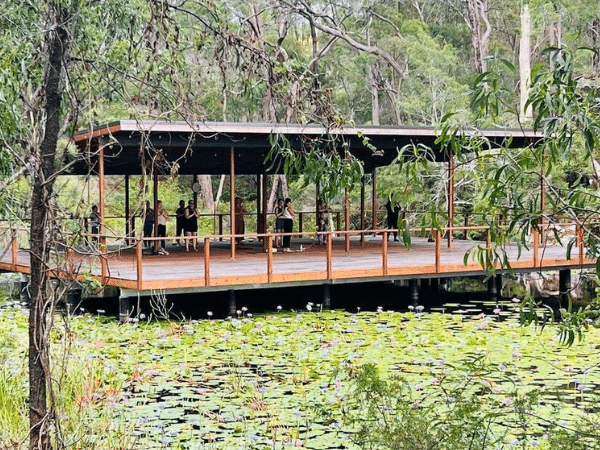
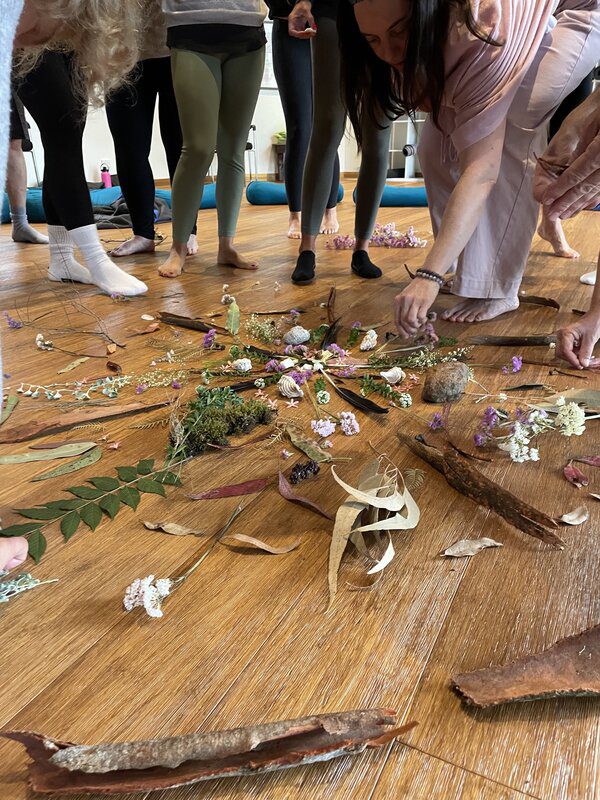
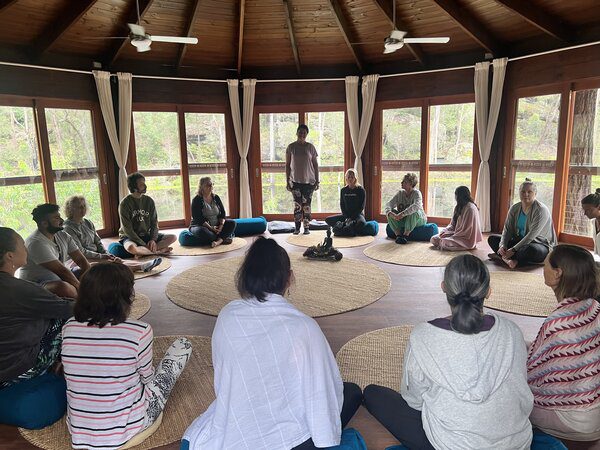
If you would like an all-in-one experience, our retreat in Sydney is a beautiful place to start. Billabong Retreat’s yoga retreat program centres around slow, embodied movement, paired with gentle guidance, so every guest leaves feeling calmer and cared for.
If you are craving a longer reset, our women’s health retreat weaves somatic movement together with rest, nourishment and connection. And for those wanting to settle the mind as well as the body, our mindfulness retreat and meditation retreat in Sydney offer a natural complement to somatic practice.