Some days your body feels like it is running on high alert before you have even had your coffee. Your shoulders feel sore and tired from tensing up throughout the day. Your breaths are shallow and quick. Your mind spirals from one thought to the next without settling anywhere.
This is often what a frazzled nervous system feels like from the inside.
There are several ways to step out of that state. One of the most effective ones is tapping into our inner ‘reset button’ called the vagus nerve. Learning a few simple vagus nerve exercises can help you move out of stress mode and back into a calmer, steadier state, often within minutes.
At Billabong Retreat, we offer the space for this shift to happen. Guests arrive feeling tense and overstimulated, and by the end of their stay at our wellness retreat, their shoulders have dropped and their breathing, slowed. These are some of the same tools we build into that experience.
What is the Vagus Nerve?
The vagus nerve is the longest cranial nerve in your body, running from the brainstem through the neck, chest and abdomen and connecting with organs including the heart, lungs and digestive system.
It plays a central role in your parasympathetic nervous system, the part responsible for rest, digestion and recovery. When your vagus nerve is working well, your body can shift out of fight or flight more easily.
Chronic stress, poor sleep, and constant busyness can all wear this system down over time. That is where vagus nerve exercises come in. Practising vagus nerve exercises regularly may help to:
- Reduce feelings of stress
- Support healthy heart rate variability
- Aid digestion
- Improve sleep quality
- Help your body settle more easily after stress
These exercises are not meant to get rid of stress completely; nothing ever can in this day and age. Rather, they give your body a gentle nudge back towards balance.
9 Vagus Nerve Exercises to Try Today
1. Slow, Belly Breathing
Long, slow exhales are one of the simplest ways to activate your vagus nerve. Place a hand on your belly and breathe in through your nose for a count of four, then breathe out through your mouth for a count of eight.
The longer exhale signals safety to your nervous system. A few minutes of this practice can lower heart rate and quiet racing thoughts.
2. Humming, Singing or Chanting
Your vagus nerve connects to the muscles in your throat and vocal cords. Humming a favourite tune, singing in the car or chanting a long “om” can stimulate these muscles directly. It might feel a little silly at first if you’re not used to it. Give it a try anyway. Many people notice a subtle wave of calm within a few minutes.
If you need more guidance, we also offer sound healing sessions at Billabong Retreat.
3. Gargling
This one sounds unusual, but it works on the same throat muscles as humming and singing. Gargle a mouthful of water vigorously for thirty seconds, once or twice a day. It is quick, easy and something you can build into your morning routine without much thought.
4. A Splash of Cool Water
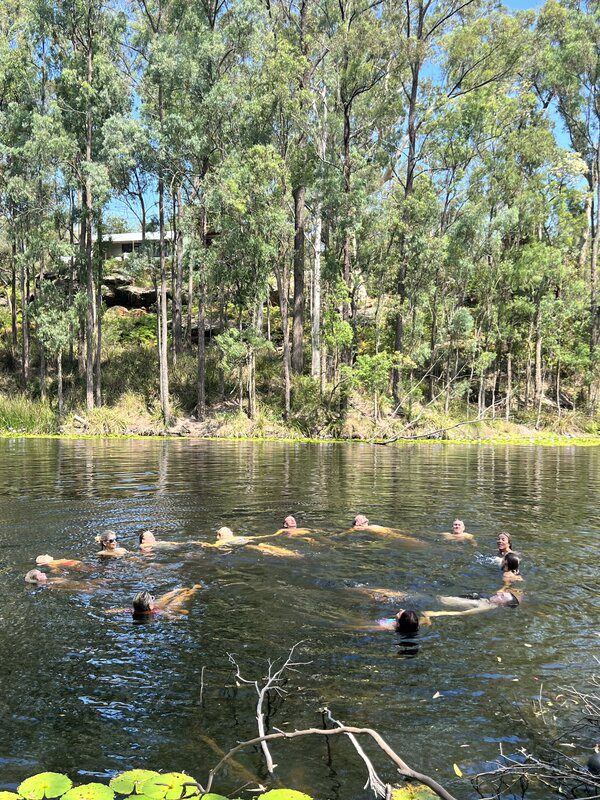
Cold exposure can trigger a reflex that helps slow your heart rate and settle the nervous system. While ice baths often get the attention, you do not need to go that far to feel the effect. Try splashing cool water on your face, holding a cool cloth against your neck, or finishing your shower with 15 seconds of cooler water. Even brief exposure can help.
5. Gentle Movement and Stretching
Slow, mindful movement helps shift your body out of high alert.
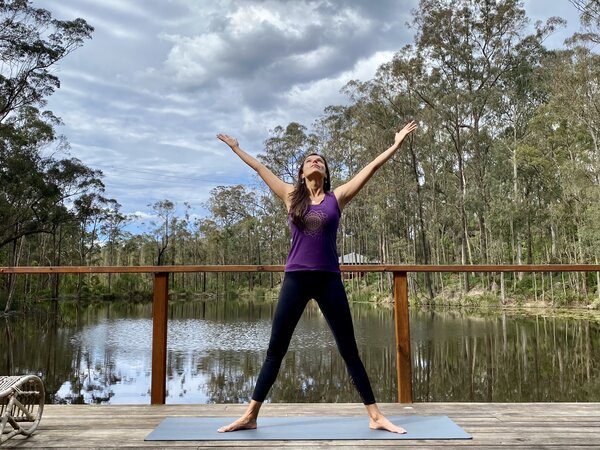
Gentle yoga flow, a walk outdoors or some easy stretching with deep breathing can all support your nervous system. These are soothing vagus nerve exercises supported at our yoga retreats near Sydney, with guided Hatha yoga and Yin yoga sessions. Give yourself the space to slow down, reconnect with your body and take what you learn at the retreat home with you.
6. Eye and Neck Relaxation
This vagus nerve exercise uses gentle eye movement to help signal a sense of safety to your nervous system. Lie down, keep your head still and look straight ahead.
Without turning your head, shift your gaze to one side and hold it there for around 30 seconds. You may notice a yawn coming in, eyelids feeling relaxed, or a general sense of release. Then return your eyes to the centre and repeat on the other side.
7. Mindfulness and Meditation
Bringing your attention gently back to the present moment can support your vagal tone over time. A short guided meditation, a body scan, or simply sitting quietly with your breath are all good starting points.
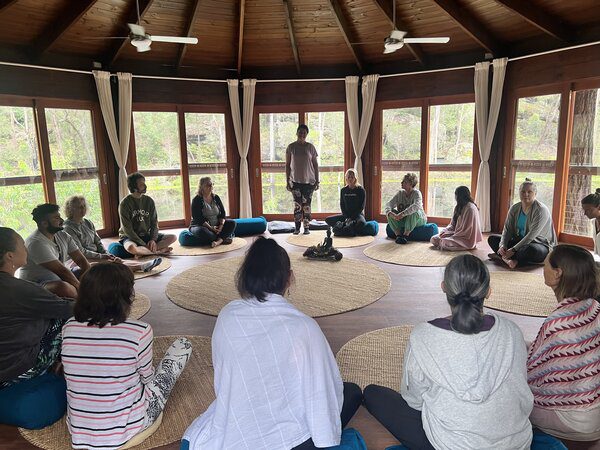
Even a few minutes a day adds up. Many of our guests find that a mindfulness retreat gives them the structure and support to feel more grounded and clear-headed.
8. Gentle Self-Massage
Touch around your ears, neck and feet can help calm your nervous system. Try gently massaging behind your ears, rolling your shoulders, or pressing along the arch of each foot with your thumbs.
Self-massage is one of the most soothing vagus nerve exercises to build into a weekly routine. A professional massage works just as well, and often better, since it also gives your mind permission to switch off.
9. Moderate Physical Exercise
Regular movement supports a healthy nervous system over time. Research links moderate aerobic activity to better autonomic balance and lower stress levels. The exercise itself does not need to be intense; the key is consistency. Even a daily walk counts towards a calmer, steadier baseline.
Small Steps, Steady Calm
You do not need to try all nine vagus nerve exercises at once. Choose one or two that feel manageable and build from there. Over time, these small practices can help settle even the most frazzled nervous system, one long exhale at a time.
If you would like more time and space to properly reset, our women’s retreat is designed around this kind of recovery.
Whether you come for a day or stay longer, we would love to help your nervous system find its way back to calm.